
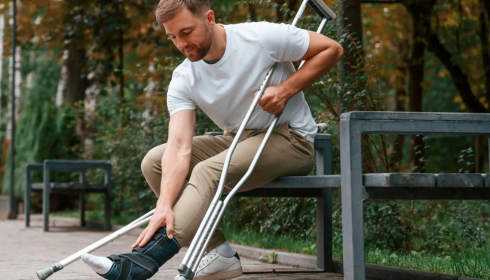
For most people, walking through their neighborhood, crossing a street, or heading to a nearby store is an ordinary part of daily life. In Indianapolis, however, pedestrian accidents can turn these simple routines into life-altering events in an instant. A distracted driver, a rushed turn, or a moment of inattention can leave a pedestrian facing injuries that permanently change how they live, work, and move through the world.
Unlike vehicle occupants, pedestrians have no protection in a collision. The human body absorbs the full force of impact, often resulting in widespread trauma. Many injured pedestrians only begin to understand how dramatically their lives have changed after speaking with pedestrian accident lawyers in Indianapolis who recognize how severe and long-lasting these injuries can be.
Vaughn A. Wamsley regularly works with Indianapolis pedestrians whose lives were altered in seconds by preventable crashes. Understanding how these accidents affect every aspect of life is essential for protecting long-term recovery and stability.
How ordinary walks become dangerous
Pedestrian accidents rarely occur during obviously risky behavior. They often happen during everyday activities when people least expect danger.
• Crossing the street at a marked crosswalk can become dangerous when drivers fail to yield or misjudge timing. Pedestrians often assume drivers will stop, only to be struck mid-crossing.
• Walking along the roadside becomes hazardous when sidewalks are missing or obstructed, forcing pedestrians closer to traffic.
• Parking lots and driveways create risks when drivers focus on vehicles rather than people walking nearby.
These situations highlight how easily a routine walk can turn dangerous.
The moment of impact and immediate aftermath
When a vehicle strikes a pedestrian, the impact is sudden and overwhelming. The body is often thrown onto the hood, windshield, or pavement.
• Immediate injuries may include fractures, head trauma, and internal injuries. Pain and shock often make it difficult for pedestrians to assess their condition fully.
• Emergency responders prioritize stabilizing the injured person, but the full extent of injuries may not be apparent at the scene.
• Pedestrians are often unable to advocate for themselves due to pain or confusion, placing them at a disadvantage from the start.
Injuries that change lives permanently
Life-altering pedestrian injuries affect more than physical health. They reshape daily routines, independence, and plans.
• Traumatic brain injuries can affect memory, concentration, and emotional regulation, altering how individuals work and interact with others.
• Spinal injuries may lead to chronic pain, limited mobility, or permanent disability, requiring ongoing treatment and accommodations.
• Severe fractures can result in lasting weakness, arthritis, or mobility limitations even after healing.
These injuries often require long-term adaptation rather than short-term recovery.
Delayed realization of long-term impact
Many pedestrians do not immediately grasp how much their lives will change. The realization often comes weeks or months later.
• Pain that initially seemed manageable may become chronic and limiting.
• Activities once taken for granted, such as walking long distances or standing for extended periods, may no longer be possible.
• Emotional challenges, including anxiety and depression, often emerge as limitations become clear.
This delayed realization can be emotionally devastating.
Medical care over the long term
Life-altering injuries require ongoing medical care that extends far beyond the initial hospital visit.
• Follow-up appointments, imaging, and specialist care become routine parts of life.
• Rehabilitation may involve months or years of physical and occupational therapy.
• Some injuries require assistive devices, home modifications, or ongoing pain management.
Medical care becomes a long-term commitment rather than a short-term event.
Financial consequences of life-altering injuries
The financial impact of a pedestrian accident can be just as profound as the physical injuries it causes.
• Extended time away from work can reduce income or end careers entirely.
• Medical expenses accumulate over time, including therapy, medications, and future procedures.
• Additional costs, such as transportation assistance or home modifications, add to the burden.
These financial pressures often persist long after the crash.
How drivers and insurers minimize impact
Drivers and insurance companies often minimize the consequences of pedestrian injuries.
• Drivers may focus on vehicle damage rather than human harm.
• Insurers may argue that injuries are exaggerated or unrelated to the crash.
• Long-term limitations are often dismissed as preexisting or unavoidable.
These narratives can undermine recovery if not addressed carefully.
Indiana fault rules and life-altering injuries
Indiana’s fault system plays a significant role in pedestrian cases involving permanent injuries.
• Insurers often attempt to assign partial fault to reduce responsibility.
• Pedestrians must remain under the 51 percent fault threshold to recover damages.
• Evidence and documentation are critical when injuries have lifelong consequences.
Understanding these rules is essential in protecting future needs.
Indianapolis environments that increase severity
Specific Indianapolis environments increase the likelihood of severe pedestrian injuries.
• High-speed roads like Keystone Avenue and sections of Washington Street increase impact force.
• Wide intersections require longer crossing times, increasing exposure.
• Areas with limited pedestrian infrastructure force walkers into dangerous proximity with vehicles.
These conditions contribute to the severity of pedestrian accidents.
The emotional toll of permanent change
Life-altering injuries affect emotional well-being as much as physical ability.
• Loss of independence can lead to frustration and grief.
• Fear of walking near traffic may persist indefinitely.
• Adjusting to a new normal often requires emotional support.
Mental health care is sometimes necessary to adapt to these changes.
Marion County court’s perspective on permanent injuries
Marion County courts recognize that pedestrian accidents can permanently alter lives. Judges and juries examine long-term medical needs, employment impacts, and quality-of-life changes.
Clear documentation of permanent limitations and future needs is critical in these cases.
Steps pedestrians should take after life-altering injuries
Early and consistent action helps protect long-term outcomes.
• Seek comprehensive medical evaluation and follow all treatment plans.
• Document physical limitations, pain levels, and daily challenges.
• Preserve evidence related to the crash and injuries.
• Avoid minimizing injuries when speaking with insurers.
These steps help create a clear record of how life has changed.
Why early guidance matters after life-altering pedestrian injuries
Life-altering injuries require long-term planning and protection. Early guidance helps injured pedestrians avoid decisions that compromise future care and stability.
Vaughn A. Wamsley works with Indianapolis pedestrians whose lives were permanently changed by preventable accidents. When a simple walk ends in lasting injury, speaking with pedestrian accident lawyers in Indianapolis can help protect your health, your rights, and your future.